Tom Noonan

Commentary on horse racing and politics

  • BLOGS
  • HOME
  • HORSE RACING
  • PHOTO GALLERY
  • RACING PARTNERSHIP

Hayward vindicated by Inspector General’s report

Posted by noonante on August 28, 2014
Posted in: Horse Racing, Political/Social commentary, Politics. Tagged: Andrew Cuomo, Charles Hayward, Inspector General, NYRA, Robert Megna, takeout. 2 Comments

The New York Inspector General finally released her report on the incorrect takeout rate by the New York Racing Association over a 15-month period ending in late 2011.  Her report concluded that many were to blame for the error, including one of the state agencies with oversight responsibility for NYRA.

While media reports focused on her conclusion that former CEO Charles Hayward and General Counsel Patrick Kehoe were “derelict” in not discovering the error, if one goes beyond the executive summary and reads the entire 122-page report, it becomes apparent this conclusion was unwarranted concerning Hayward.  Indeed, a fair reading of the report, coupled with a familiarity with the government culture in Albany, would lead to a conclusion that it was politics  –  not malfeasance  –  that led to Governor Andrew Cuomo’s remarkable seizure of  NYRA.

The takeout issue was identified when the State Comptroller uncovered it while reviewing another matter.  (“Takeout” refers to the amount retained by the track from wagers.  The percentage varies depending on the type of wager.  In New York, for example, the track’s current takeout on win wagers is 16% while it is currently 24% on exotic wagers such as the Pick 6.)

A 2008 statute raising the takeout in order to provide additional money to New York City Off Track Betting facilities had a sunset provision, meaning the higher rate expired in September, 2010.  When NYRA realized its mistake at the end of 2011, it took corrective steps, including returning excess money it had retained to winning bettors it could identify.  It provided further relief by lowering the illegal 26% rate to 24%  –  below the 25% it could have retained  –  as a way of making good with its customers.  NYRA also directed its Integrity Counsel to investigate the failure to lower the takeout to determine how it occurred.

In addition to the NYRA review, a separate investigation was undertaken by the Racing and Wagering Board, one of four state agencies that had oversight responsibility for NYRA.  (The Board no longer exists, with its functions being taken over by the State Gaming Commission.)  The Board issued an “Interim Report” on April 26, 2012, in which it identified “serious concerns” and concluded:  “While it is clear NYRA knew they were collecting an inappropriate rate based on an August 2011 email, they decided to continue to collect the excess takeout in violation of the Racing Law….”

Although the Board had not reviewed the numerous documents it had requested but not yet received, and did not interview a single person, the Interim Report set in motion a chain of events that led to the termination of NYRA CEO Charles Hayward and General Counsel Patrick Kehoe by NYRA’s Board, and an agreement on legislation placing NYRA under state control  –  all within a matter of four weeks.

Robert Megna, then the Chair of the Franchise Oversight Board, asked the Inspector General to investigate the takeout issue on April 29, 2012.  On Monday of this week, following an examination of “over 800,000 document pages” and interviews of 60 individuals, Inspector General Catherine Leahy Scott released her report.  There was no one mentioned in the report who had any responsibility for takeout rates that was left unscathed.  Those who were found to have some level of culpability included low-level staff at NYRA, outside auditors for NYRA and its totalisator company, the Racing and Wagering Board, members of the NYRA Board and NYRA senior executives.

For a project that consumed more than two years and obviously entailed a substantial amount of work  —  22 people from the IG staff are identified  –  there is remarkably little that is new in terms of significant findings.  Indeed, NYRA’s Integrity Counsel reached much of the same conclusions in early 2012.   That the takeout rate created in 2008 should have reverted to its prior level in September 2010 is well known.  It is surprising, however, that NYRA’s two top attorneys not only missed the expiration date of the takeout increase, but more remarkably did not interpret the law correctly, despite several opportunities to reexamine their assumptions.

What I think is new and significant is the involvement of Hayward and his explanations for why he did not address the erroneous takeout earlier.  Also significant is the complete lack of any discussion by the Inspector General on the political environment.  While she may not think that is her role as an Inspector General, it is certainly a topic that should be addressed by the media.

Central to Hayward’s involvement is the “August 2011 email” that was mentioned so prominently in the Racing and Wagering Board’s Interim Report that triggered the cascade of dramatic changes for New York racing.  Because it is so significant, it will be discussed fully.  Here is the relevant text of the email from an unidentified bettor that was sent to the Daily Racing Form‘s Steven Crist, who the IG Report describes as a friend of Hayward’s:

The 2008 NYCOTB takeout increase legislation included a sunset provision that went into effect on September 15, 2010. … The takeout limits allowed by law are now 12-17% for w/p/s, 14-21% for exacta/double wager 15-25% for tris/super and P3/4 and 15-36% for P6 with no separate rates for carryover and non-carryover pools.  (Please note that the tri/super/P3/P4 takeout is currently at 26% which is currently outside the parameters of the law.)

NYRA may be waiting for the VLT money before they lower any takeouts, but if NYRA wanted to lower takeout all they have to do is make a request to the NYSRWB, which would most likely to [sic] approve the request.

Crist asked Hayward if this was true, to which Hayward responded:

This gentleman is correct.  Off the record, we have been working on this for some time.  We originally had thought that we would announce this for Saratoga but political forces intervened.  Since we are showing substantial losses in 2010 and 2011 and we have been smacked around by Cuomo (and he could check the SRWB from approving), we decided to wait.  Also, the regional OTBs who collectively lost money in 2010 will scream like stuck pigs and that would provoke Skelos who is very tight with the guys who run Nassau OTB to introduce anti-NYRA legislation for the benefit of the OTBs.  Finally, we are quietly working on a plan to open 10 or so restaurant/bars in the city and we did not want the politicos to block this effort.

We have had some internal debates on how much to lower each pool and how we would present this to our simo customers, the consumers and the politicos.  I would appreciate it if you could keep these details confidential.  I would also welcome a further discussion on this topic with you before the meet is over.

Before we look at what Hayward said to the the IG regarding this exchange, let’s look at what he said in the response.  After saying, “[t]his gentleman is correct,” he immediately moves into NYRA’s hope that all takeout rates can be lowered.  This is not only consistent with his personal views, but also conforms to NYRA’s opposition to increasing the takeout rates when the 2008 legislation was enacted.  The IG Reports confirms this has been NYRA’s consistent position during this period.

The IG, recognizing the centrality of this exchange to the conclusions of the Racing Board’s Interim Report,  is implicitly critical of the Board’s failure to conduct any interviews.  Noting that the IG’s interview of Hayward on this email exchange required 15 pages of transcript, the Report states that their actually speaking with Hayward provided “greater insight.”

Hayward said his response addressed only the second paragraph of the bettor’s email, not the first:

And in my response, I say we’ve been smacked around by Cuomo, and he could check the Racing and Wagering Board from approving.  Now if I knew we were outside the statutory law.  Would I suggest that Cuomo might not approve that by the Racing and Wagering Board?  I don’t think I would.

(Quotation is as it appears in the IG Report.)

The IG’s Report acknowledges that Hayward’s statements are consistent with what he told NYRA”s Integrity Counsel in March, 2012.  The Report also documents that Hayward was involved in discussions within NYRA in June, 2011, regarding his goal of reducing takeout rates for all wagers.

There is simply no reason to believe that Hayward thought the increased takeout on exotic wagers had expired at the time of the “August 2011 email.”  NYRA’s lawyers did not think so.  As the IG Report amply demonstrates, NYRA’s top two attorneys not only were oblivious to the statutory sunset provision, but thought the statute permitted an ongoing rate of 26%.  Why would the CEO have a different view?  (I place little stock in the fact that being aware of something in 2008 means you will remember it two years later  –  the basis of the IG’s criticism of many mentioned in her Report.)  As the Report states:

Hayward added, “I believe when I ask a legal question of my general counsel and he gives me an answer, I believe it.”  Indeed, Kehoe summed up the problem in this way to the Inspector General:       “[U]nfortunately, I gave bad advice.”

Given that a CEO relied on consistent  – albeit erroneous  –  advice from a General Counsel with long experience at the business, why would the Inspector General then conclude that Hayward “questionably testified”  –  under oath  –  and that he was “derelict in his duties in failing to take note of NYRA’s noncompliance with the statutory takeout rate for exotic wagers  –  a fact plainly stated in the email?”

I think the answer to that question gets to the second significant aspect of the IG’s Report  –  the effect of New York’s political environment on this matter.  Even though both Hayward and Kehoe raised political considerations in explaining what they were thinking during the period under review, the Report does nothing more than quote them.  Now the Inspector General may feel constrained from discussing such realities, but I feel no such limitations.

The plain fact is that almost every aspect of this event has been deeply infused with politics.  Start with the fact that Off Track Betting facilities in New York are laced with political influence and patronage.  Why else would a horse race betting franchise in New York City be unable to operate at a profit?  Why would other OTB’s in the state be facing similar troubles?  The 2008 legislation increasing takeout rates had as its express purpose bailing out the bankrupt New York City OTB’s.

So Hayward’s (and Kehoe’s) view that political considerations were in play when they wanted to lower all takeout rates, and that opposition was expected from the “politicos” was not some kind of paranoid delusion  It’s the same with Hayward’s anticipated resistance to bringing betting terminals to restaurants and bars so residents of the nation’s largest city could make an occasional wager on a horse race.  (As the IG Report notes, wagering handle is the most significant part of NYRA’s revenue stream.  Before NYCOTB closed in 2011, simulcasting revenue accounted for 60 per cent of NYRA’s total revenue.  It dropped to 43 per cent in 2011.  But three years later there has been no progress in restoring such a vital part of NYRA’s business.)

The long knives came out at the end of 2011 when it was revealed that NYRA had mistakenly failed to decrease one takeout rate, even though Hayward acknowledged the mistake and NYRA took immediate corrective action.  Robert Megna, whose day job is as Cuomo’s Budget Director, has also served as the Administration’s point person on racing issues.  He was Chair of the Franchise Oversight Board when the takeout error was discovered, and directed the Racing and Wagering Board to conduct a review.

When the Interim Report was released, Megna referred the matter to the Inspector General to investigate further.  Megna’s choice of the IG is interesting.  While many may assume that an Inspector General is an independent person not subject to political influence, that is not the case in New York.  Instead, the IG is appointed by the Governor, and her term in office ends when the Governor’s does.  If Megna were interested in a truly independent review, he would have sent it to the Comptroller.  But he got what he wanted.

Inspector General Scott thus ignored the overwhelming evidence and concluded that Hayward was “derelict” in fulfilling his responsibilities.  I understand that the leader of an organization is the one ultimately accountable for what happens on his watch, but I do not think relying on the advice of two seasoned attorneys with experience in the organization makes one “derelict.”  It is usually the ignoring of legal advice that leds to that accusation.

Scott also fails to mention one of the central documents in this whole matter  –  and, once again, Megna is at the center of it.  On May 15, 2012, Megna and John Sabini, then head of the Racing and Wagering Board, sent a remarkable letter to the Chairman of the NYRA Board in which they impugned the integrity, character and fitness of Board members and threatened to rescind their licenses to participate in racing.  What was the offense?  It wasn’t the failure to catch the incorrect takeout rate.  Rather, it was their temerity in selecting replacements for Hayward and Kehoe.

While the newly selected CEO and General Counsel continued to serve, the threats and intimidation by Megna and Sabini served its purpose.  It cowed the old NYRA Board into an agreement in which the Board ceded power and control to the Governor.  Legislation was soon enacted to make the Cuomo coup official.  There is, of course, nothing positive the IG could say about these tactics of the Cuomo Administration, so we can presume that explains why there is no mention of this letter.  (A similar reticence did not prevent her from identifying Board members who failed to disclose their ownership of horses, even though this tidbit had no connection to the takeout issue.  I mean, who knew that Ogden Mills Phipps owned race horses?)

It’s not surprising that the Inspector General, as an appointee of the Governor, tiptoed around behavior by top officials that embarrass the Governor  –  perhaps I should say, “should embarrass the Governor.”  She is to be given credit, however, for including in her Report the evidence upon which a reasonable person would conclude that former CEO Hayward  acted appropriately.  But she did not reach that conclusion.

After all, we could not have a determination by the Governor’s Inspector General that the Governor’s basis for taking control of New York’s racing was based on a falsehood  –   that Charles Hayward was deliberately violating the law.  Had the Racing and Wagering Board simply taken the step of interviewing him  –  an action required by basic decency if not good government  –  they would have heard the same explanation he had given NYRA’s Integrity Counsel a month earlier.  But decency, good government and the truth were apparently not considerations for the Governor and his men who were determined to get their hands on NYRA  –  no matter who had to be trampled in the process.


Isn’t it time to address Saratoga’s equine fatalities?

Posted by noonante on August 26, 2014
Posted in: Horse Racing, Saratoga thoughts. Tagged: equine deaths, NY Gaming Commission, NYRA, Saratoga race meet. 5 Comments

The five-day period beginning the Thursday before the Travers has seen five fatalities during racing or training at Saratoga.  Overall, racing fatalities exceed the total for last year’s meet by two, with seven occurring so far, and there’s a week of racing to go.  There have also been four training fatalities (and two more at Belmont) compared with two during the entirety of last year’s meet.

The New York Racing Association has taken several major steps to lessen the occurrence of equine deaths.  What they are not particularly good at, however, is communicating what they are doing, what has been effective and what has not been.

Dr. Scott Palmer, who headed up the landmark 2012 Report on Equine Safety, is now the Equine Medical Director for New York’s Gaming Commission.  One of the improvements recommended by the Report is conducting necropsies on all catastrophically injured horses.  What is not known  –  publicly, however  –  is what, if any, conclusions have been reached from the post-mortem reviews.

The most recent fatality happened during Monday’s first race.  I saw the fall on TV, but fortunately missed the aftermath of the horse suffering on the track following what was said to be a broken neck.  I then heard accounts of two people who were making their first visit to a race track.  Needless to say, the experience was unsettling, with one couple leaving immediately.  Another long-time fan and owner told me that seeing catastrophic breakdowns was causing her to think about never returning.

If NYRA and the Gaming Commission would be more forthcoming on what they have learned from studying catastrophic injuries it would neither lessen the trauma from watching a fatality, nor the horrible experience of those connected with the horse, from the owner to stable hands.  It would, however, provide a measure of comfort to those who love the sport that New York is as concerned with these incidents as they are.

NYRA has no shame

Posted by noonante on August 22, 2014
Posted in: Horse Racing, Politics, Saratoga thoughts, Uncategorized. Tagged: new NYRA, NYRA, Saratoga race meet. 5 Comments

Late August in Saratoga is a special time.  The temperatures are starting to moderate and the late afternoon sun bathes the race track in a special light.  Thursday was not such a day.  It rained all night, so that by early in the morning, the New York Racing Association postponed the steeplechase stake and took the remaining turf races off the grass.  After scratches, the remaining nine races saw three five-horse fields, three with six and two with seven.  With dark skies threatening more rain, it was not an auspicious day for going to the track.  This is what it looked like in mid-afternoon:


DSC_2009                     DSC_1995 PS

DSC_2018                       DSC_2028

DSC_2036 PS                       DSC_2022


NYRA announced the attendance as 18,093.  This represents a 31 per cent increase over last year’s number for the same day, when it was “fast and firm” for the whole day.  NYRA’s cooking-of-the-books on attendance has been written about previously, with Paul Post of The Saratogian discovering that NYRA counts some 6,000 season passes in the attendance figure, whether or not a pass holder actually comes to the track.

What is not clear is why NYRA persists in falsifying the attendance.  At this point they may feel backed into a corner.  But no one believes their numbers  –  neither the racing industry nor the fans who do show up.  My theory is that NYRA is little more than an arm of the Cuomo reelection campaign.  No straight talk, just happy talk.

There has been speculation in the mainstream media that Cuomo is seeking to drive up his victory margin  –  you know, just like Chris Christie did last year before “Bridgegate” broke.  I mean he has even sued to keep Zephyr Teachout off the ballot, as if she could possibly pose a threat to $30 million in campaign funds and an incumbent who still has decent favorability numbers.

Were it not for that pesky United States Attorney hauling members of his Administration before a grand jury, everything would be rosy in Cuomoland.  We’ll just have to put up with the ludicrous announced attendance figures as we await the end-of-the-meet press release breathlessly informing us what a tremendous success the meet has been.  Perhaps they will explain how attendance could experience such a dramatic increase, but handle is essentially flat as David Grening has been reporting in the Daily Racing Form.

Differing visions for New York racing

Posted by noonante on August 18, 2014
Posted in: Horse Racing, Political/Social commentary, Politics, Saratoga thoughts. Tagged: Martin Panza, new NYRA, NYRA, Rick Violette. Leave a comment

Martin Panza arrived at the New York Racing Association late last year following the demise of his prior employer, Hollywood Park in California.  He is now the Senior Vice President of Racing Operations at NYRA, and is responsible for the selection of races that will be on a race card at the NYRA tracks.

Rick Violette has been training horses for over 30 years and is a fixture on the New York circuit.  He is the President of the New York Thoroughbred Horsemen’s Association and, in that capacity, is an ex officio member of the NYRA Board.  He brings a different perspective to the discussion on the future of racing in New York than Panza’s.

Panza’s signature innovation this year has been the concept of “Big Days,” a notion he believes is the future for racing.  The first such “Big Day” was Belmont Stakes Day.  He moved three Grade I races, including the Metropolitan Mile, from Memorial Day to Belmont day.  So what had been a big day in New York on the holiday marking the start of summer became part of the under card for the final Triple Crown race.  Not surprisingly with California Chrome shooting for the sweep, 100,000 showed up at Belmont  –  a crowd consistent with prior attempts at racing immortality.

The next “Big Day” was July 5, where Panza moved two existing turf stakes for three-year olds from other days, but bumped the purses for each to at least $1 million.  Three additional graded stakes were part of the under card.  Total purse money offered was  $3.8 million.  A grand total of 11,118  showed up.  NYRA officials were practically giddy at the tremendous success of this event.  By contrast, Monmouth Park in New Jersey, the closest competitor to Belmont, offered $400,000 in purse money and attracted 8,782 fans.  Its feature was an ungraded $100,000 stake.  The almost 10-1 differential in purse money attracted a mere 2,400 more patrons.  When reality set in, NYRA actually blamed the weather from the day before as depressing the “Big Day” turnout.

Whitney Stakes Day was the next “Big Day” where NYRA’s goal was to attract a Travers-type crowd of 50,000.  They fell short, drawing 36,318, or about three thousand more than last year’s attendance.  Of course, NYRA’s attendance figures are considerably suspect, as discussed in this post and this one.  One reason is that NYRA counts the 6,370 who purchased a season pass as attending, even if none of them actually showed.  If we make the generous assumption that half did appear, and subtract the other half from this year’s figure, the resulting number is actually smaller than last year’s crowd.

The next “Big Day” is, of course, the Travers.  The Travers is like the Kentucky Derby  –  it doesn’t matter what horses are entered or what the under card is.  I mean, do you think a Wicked Strong-Tonalist rematch is going to get the juices flowing?  It’s an event and people will show no matter the weather or the field.  Although if we had a match-up as compelling as Affirmed v. Alydar, we would expect a record-breaking card.  Even a California Chrome entry would make this year’s event much more compelling.

Panza may also be the inspiration for one of the most disturbing proposals in recent years in New York.  One morning I showed up on the back stretch and saw this:

nnDSC_1911


This is Clare Court, one of the most historic and picturesque locations at the Saratoga Race Course.  I was informed that this was a Panza brainstorm, replacing the white wood fencing with this metal monstrosity that he supposedly had back in his West Coast days.  While the fencing has since been moved, the dumpster still is there, not exactly contributing to the allure of this magical section of the back stretch.  I asked NYRA if the wood fencing was to be replaced, but they did not respond.

Panza’s latest headlines  –  at least in the racing media  –  were his thoughts on limiting the number of races run.  In remarks at the Jockey Club Round Table in Saratoga, Panza said that the declining foal crop meant the racing industry needed to reexamine the number of races it was running.  The numbers he cited are indeed disturbing.  From a level of 35,000 foals being born only a few years ago, the new normal seems to be 22,000.  That necessarily means there are considerably fewer horses that can fill race cards.  (New York, interestingly, has reversed a steady decline.  The foal crop increased by 19 per cent from 2011 to 2012.)

Panza raised the possibility of either reducing the number of race days or reducing the number of races run each day.  Other ideas that have been floated by NYRA’s Board include eliminating either the Belmont or Aqueduct tracks located down state, or even eliminating winter racing altogether.

Enter Rick Violette.  While he is no longer a voting member of the NYRA Board  –  his vote was taken away in Governor Cuomo’s legislation establishing the temporary and “new” NYRA  –  Violette is one of the rare members of the Board who is clearly knowledgeable about New York racing and its history, and is not afraid to speak his mind.  It is not clear, however,  if not downright doubtful, that independent voices are welcome in the rarefied chambers that now control New York racing.

But he is not a calcified remnant of the prior NYRA Board, having expressed his willingness to be open-minded and willing to experiment.  At last week’s annual seminar sponsored by Albany Law School, Violette did insist on fact-based analysis and a willingness on the part of those advocating experimentation to acknowledge when they are wrong.

The panel on which Violette appeared was entitled “NYRA Re-Organization:  Rounding the Far Turn.”  Reorganizing NYRA is one of the primary objectives of the law creating the “new” body, and is one of CEO Chris Kay’s three main objectives.  Kay declined repeated invitations to appear.  A NYRA Board member who did agree to show was a “late scratch.”

So Violette was left to explain how winterizing Belmont Park  –  and closing Aqueduct  –  was not only prohibitively expense and impractical, but would result in a diminished experience for those attending.  While he described Belmont as a “white elephant,” he said that adding a winterized surface inside the three existing tracks as would make it “like Gulfstream.”  It was not a compliment.

He went on to outline the devastating impact that stopping winter racing would have on New York’s racing and breeding industries.  According to Violette, many of the over 30,000 jobs dependent on those businesses would be lost.

Is Violette correct?  I do not know.  What I am fairly certain of, however, is that these issues require a full airing and discussion.  What we do not need is someone coming in and destroying a valuable part of an historic race track and also forcing dramatic changes on the racing program without a willingness to listen to contrary views, or to look at the objective evidence.

Has NYRA turned a corner in public perception?

Posted by noonante on August 11, 2014
Posted in: Horse Racing, Political/Social commentary, Politics, Saratoga thoughts. Tagged: Chris Kay, David Skorton, equine safety, new NYRA Board, NYRA, Saratoga race meet. 5 Comments

When they start laughing, it is never a good sign.  And they are starting to laugh at the New York Racing Association.  In a self-inflicted wound, NYRA announced that they count in their Saratoga attendance figures people who do not actually attend that day’s races.  Then they prevented reporters from entering a public meeting.  To top it off, the NYRA Board at that same public meeting announced CEO Chris Kay was awarded a raise and a $250,000 bonus for, among other things, his accomplishments to “foster transparency.”

In last Sunday’s Saratogian, Paul Post reported that NYRA considers the 6,370 who purchased a season pass as having attended the races each day of the 40-day meet.  Communications Director John Durso said that this was consistent with NYRA’s past practice and with that of Major League Baseball and the National Football League.  As I explained in this post, neither statement could possibly be true.  It would mean that the announced attendance of 8,044 on July 23 meant that only 1,674 actually paid to enter the track.  While Presque Isle Downs might be happy with that number (where last Wednesday’s on-track handle was $33.000), it is a number that represents a crisis for NYRA.

The day after the article appeared I surveyed a  small sample and asked what they thought the actual attendance was, and then what NYRA would report it as.  The standard guess was that attendance was about 10,000.  The highest estimate was one who said NYRA would report 18,000.  The NYRA figure exceeded even that with 19,000 being given as last Monday’s attendance.

Needless to say, none of those surveyed had any factual basis for their estimates of actual attendance apart from being long-time fans.  The important thing is that NYRA had no credibility and was the object of ridicule.  Now the local media, including the Times Union and the Albany NPR affiliate WAMC, are joining the fray and they too are laughing.

The risk for any business or politician is that once the media narrative changes, it becomes difficult to undo, regardless of the actual facts.  The prior NYRA leadership was constantly depicted as “scandal-ridden” even though there was never a scandal.  That perception was largely fueled by Governor Andrew Cuomo and his henchmen, who steamrolled the compliant media and Legislature to support his taking control of New York racing.

The current NYRA leadership has mostly been given a free pass because the narrative had been that they were reforming racing.  Never mind that actual reforms were never cited.  But some of the current criticism is not warranted.

The NYRA Board meetings are, indeed, open to the media and the public.  I have attended every full-length meeting until this one.  The meeting notice states that  both the media and the public must call ahead to reserve a spot.  Part of this is for security  –  the meetings in New York City  are in the building with other government offices including the Governor’s.  The other reason is that space is limited.  I have never had an issue with calling ahead.  The meetings are also web cast, although this most recent one was in large part inaudible.

A more significant criticism would be what actually transpires inside the meeting, but that would require media outlets to actually observe the proceedings.  (The racing media  –  DRF, Blood Horse and TDN actually have reporters attend the meetings.)  One advantage for the non-racing media to have a consistent narrative is that it saves them work.  So the Times Union can run a second piece today on media being prevented from entering the meeting for 40 minutes without actually having to analyze what happened once inside.

Were they to do that, they would start to realize that these Board meetings are nothing more than fatuous farces.  This one was typical of other recent ones.

It began with the reading of a prepared statement from Board Chairman David Skorton, who holds the sessions in such high regard he scheduled it during his vacation.  Then we had CEO Chris Kay read from a report that he distributed in advance of the meeting, followed by CFO Susanne Stover reading from her report also distributed in advance.

The report of the Compensation Committee recommending the bonus and salary increase for Kay lasted all of 100 seconds.  Kay’s final compensation for his first year on the job is in line with salaries paid other racing executives.  But Skorton and the Board made a big deal about how it would be based on performance with measurable goals  –  and they were able to “address” that in less than two minutes.

The report of the Equine Safety Committee was even shorter, lasting 85 seconds.  Board members practically fell all over themselves in self-congratulatory statements about the reduction in equine racing fatalities from NYRA’s high level from two years ago.  No one, however, raised two numbers that should have warranted at least some discussion.  Racing fatalities for the preceding four months are three times the number from the same period last year.  And, just as ominously, the fatalities occurring during training hours have not been reduced.

There was no discussion or questions from any Board member on two of the most significant controversies involving NYRA  –  the wide-spread dissatisfaction with NYRA’s handling of the Belmont Stakes or the falsification of the Saratoga attendance figures.  It seems that the sole purpose of these Board meetings is to give its members and CEO a chance to congratulate themselves for the great job they are doing.

But the honeymoon may be coming to an end.  When there is blood in the water, the sharks begin to circle  –  just ask the man to whom NYRA reports, Governor Andrew Cuomo.

I walked around the clubhouse and grandstand yesterday, and observed entire sections where at least half of the seats were empty.  The benches on the apron in front of the clubhouse had plenty of vacancies.  There were empty picnic tables by the paddock.  NYRA announced attendance of 40,452.  To put that number in perspective, look at the attendance for Whitney day.  NYRA has been promoting their new concept of “Big Days,” and set an attendance goal of 50,000 for the Whitney.  The reported figure was 36,318.

The attendance story is not going away, because the falsified figures represent a government agency that has lost its credibility, and NYRA has been incapable of articulating an explanation that is either logical or consistent.  I also ssupect that in addition to counting all season passes in a day’s figure, they are also counting the number of reserve tickets they sell, even if no one shows up.  While the latter may be an understandable practice, NYRA would be counting those reserved tickets holders a second time when they come through the turnstiles.  I have asked NYRA if that is their practice, but have not received a response.

If there is one thing I have learned from working in government and observing it closely, there is one virtual certainty  –  the truth will come out.

Why did NYRA start cooking the books on attendance?

Posted by noonante on August 3, 2014
Posted in: Horse Racing, Political/Social commentary, Politics, Saratoga thoughts. Tagged: Chris Kay, new NYRA, NYRA, reprivatization, Saratoga race meet. 6 Comments

In my review of the second week of racing at Saratoga, I opined that the increase in attendance was the big story for the week.  After a drop in 2013 attendance from the preceding year, NYRA reported an 11 per cent increase over 2013 and six per cent over 2012 for the same days.  (I omitted give-away days because NYRA had changed the reporting of those days from counting each purchase of a give-away coupon as attendance instead of just reporting those who actually pass through the turnstiles.)  It was good news for those hoping that New York racing thrive.

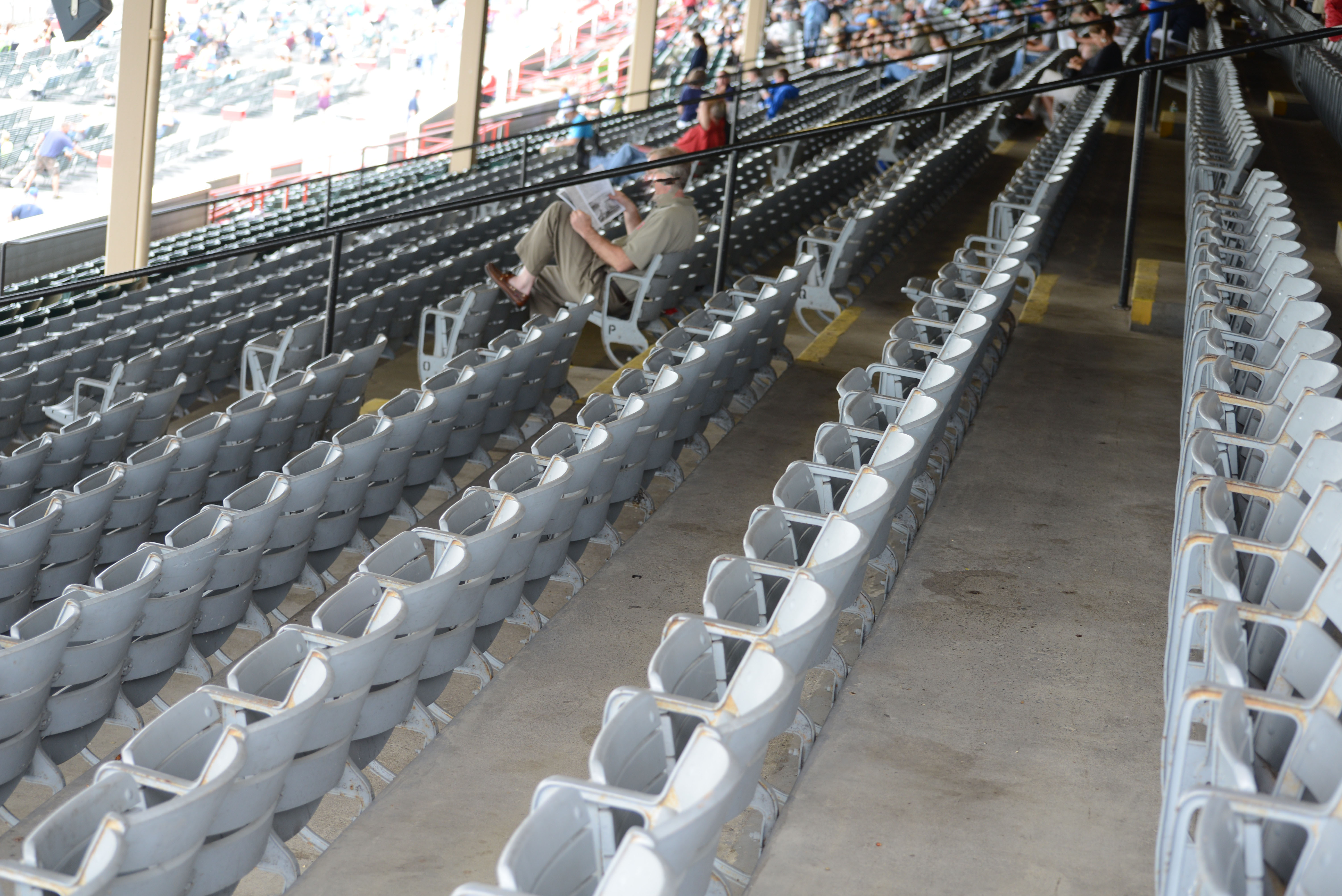
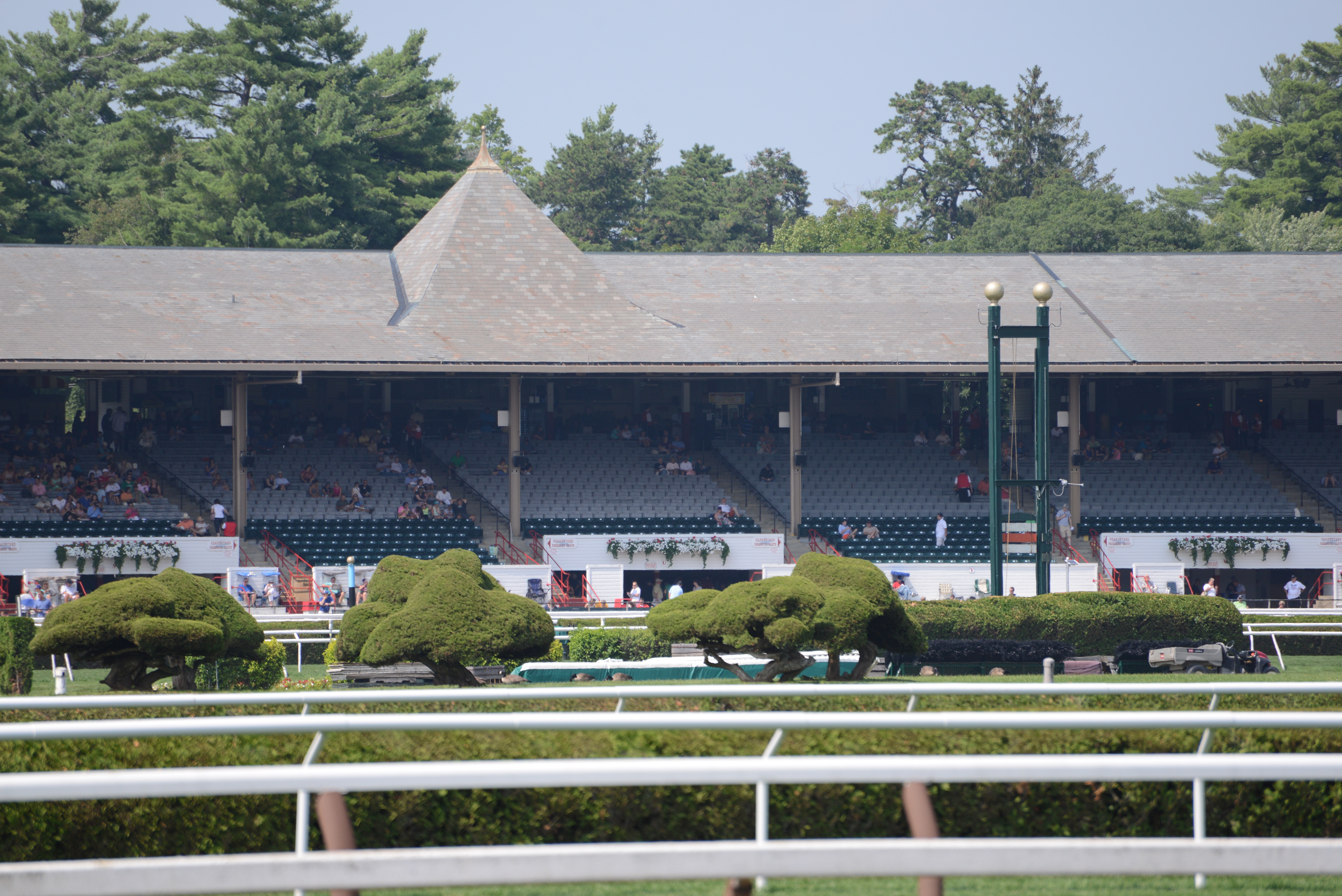
On Wednesday this week, I watched the racing from the backstretch.  The emptiness of the grandstand was of concern, particularly since the preceding Wednesday saw a three-year low of 8,044 in attendance.  When I say empty, I’m not talking about empty seats;  I’m talking about empty sections, some of which literally had no one sitting in them.  So I was flabbergasted when I saw that NYRA reported attendance of 18,500 for the day.

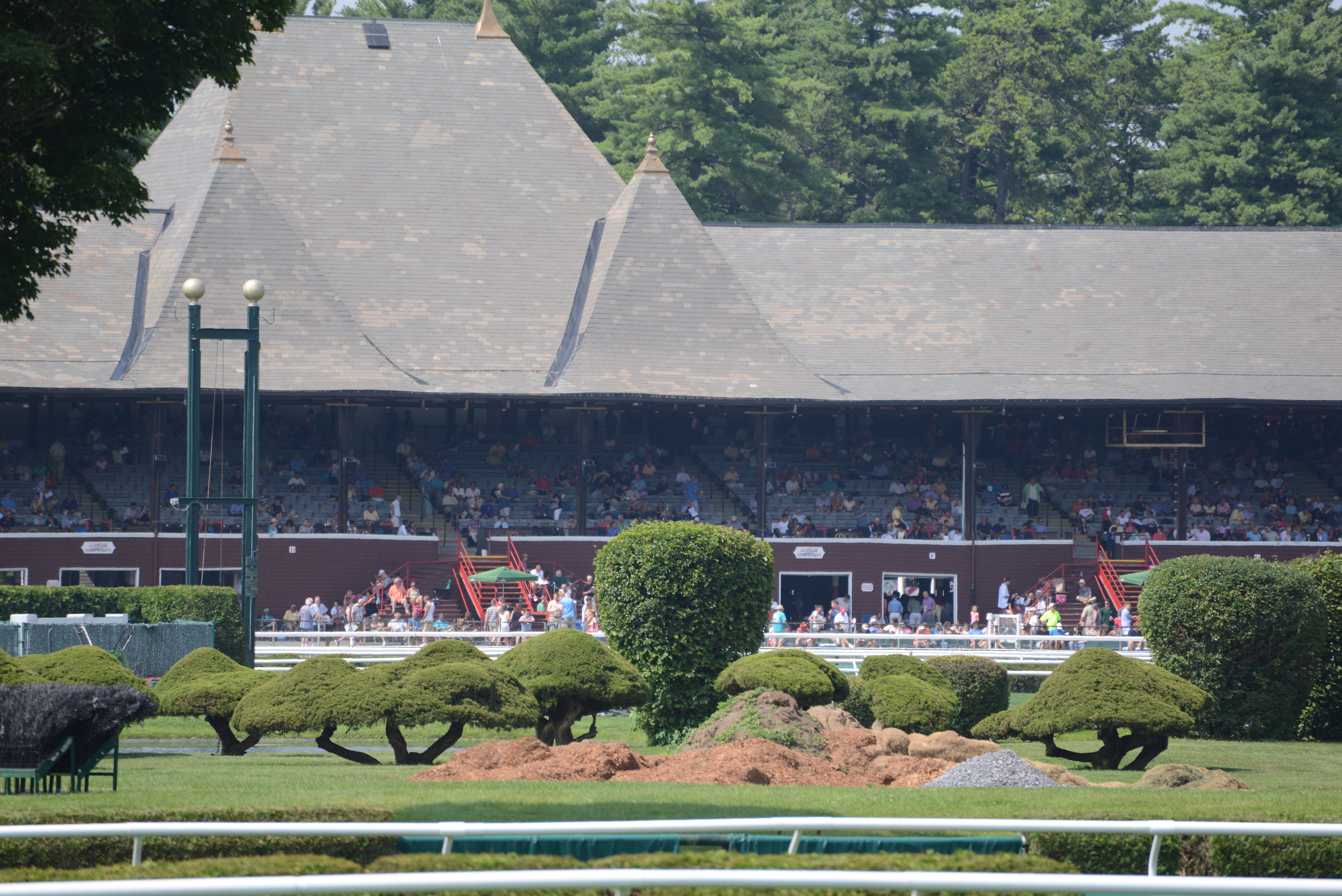
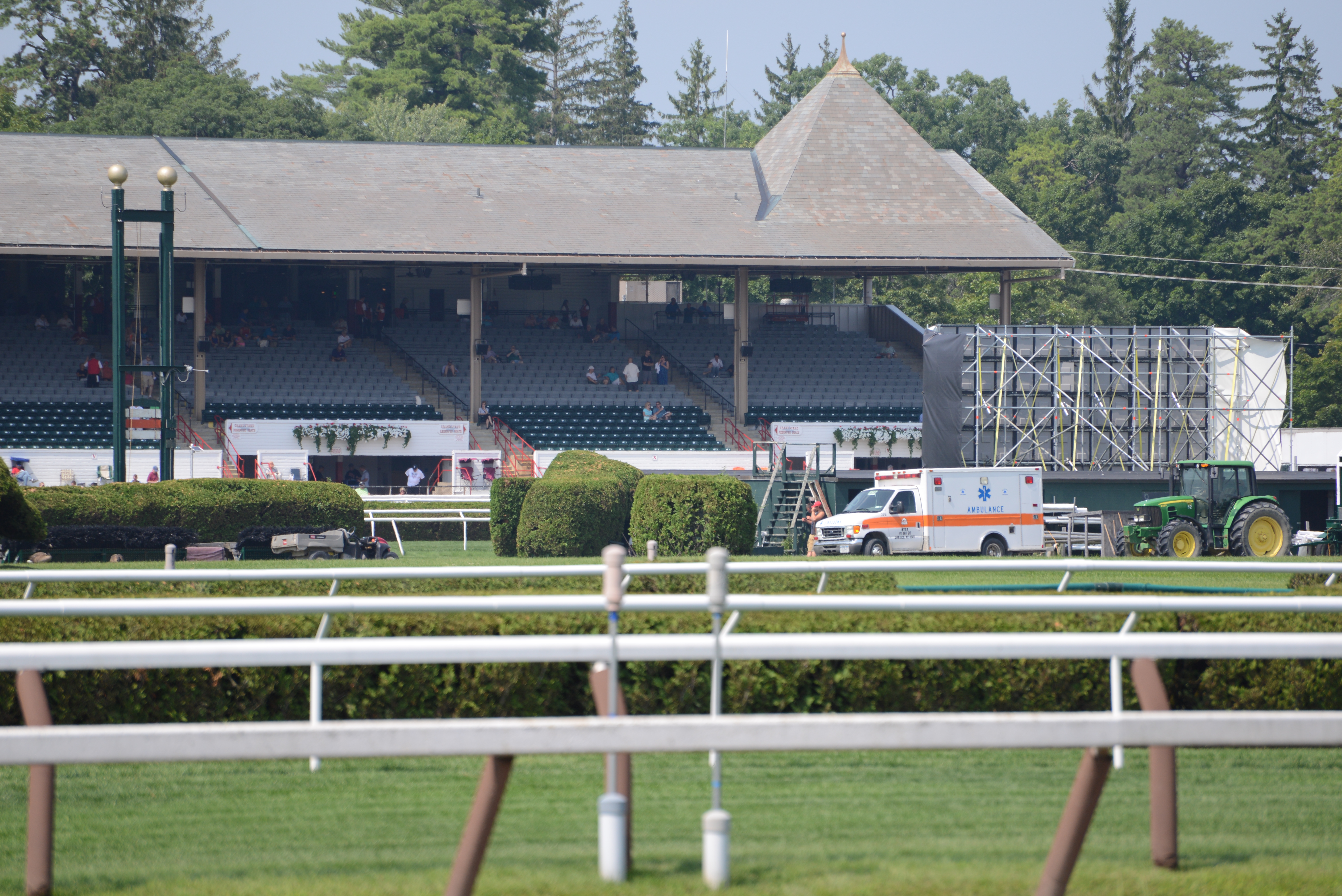
On Friday, I went over to the backstretch again, but this time took photos:

These two are of the clubhouse:

DSC_1917       DSC_1920

These are of the last six sections in the grandstand:

DSC_1926      DSC_1928

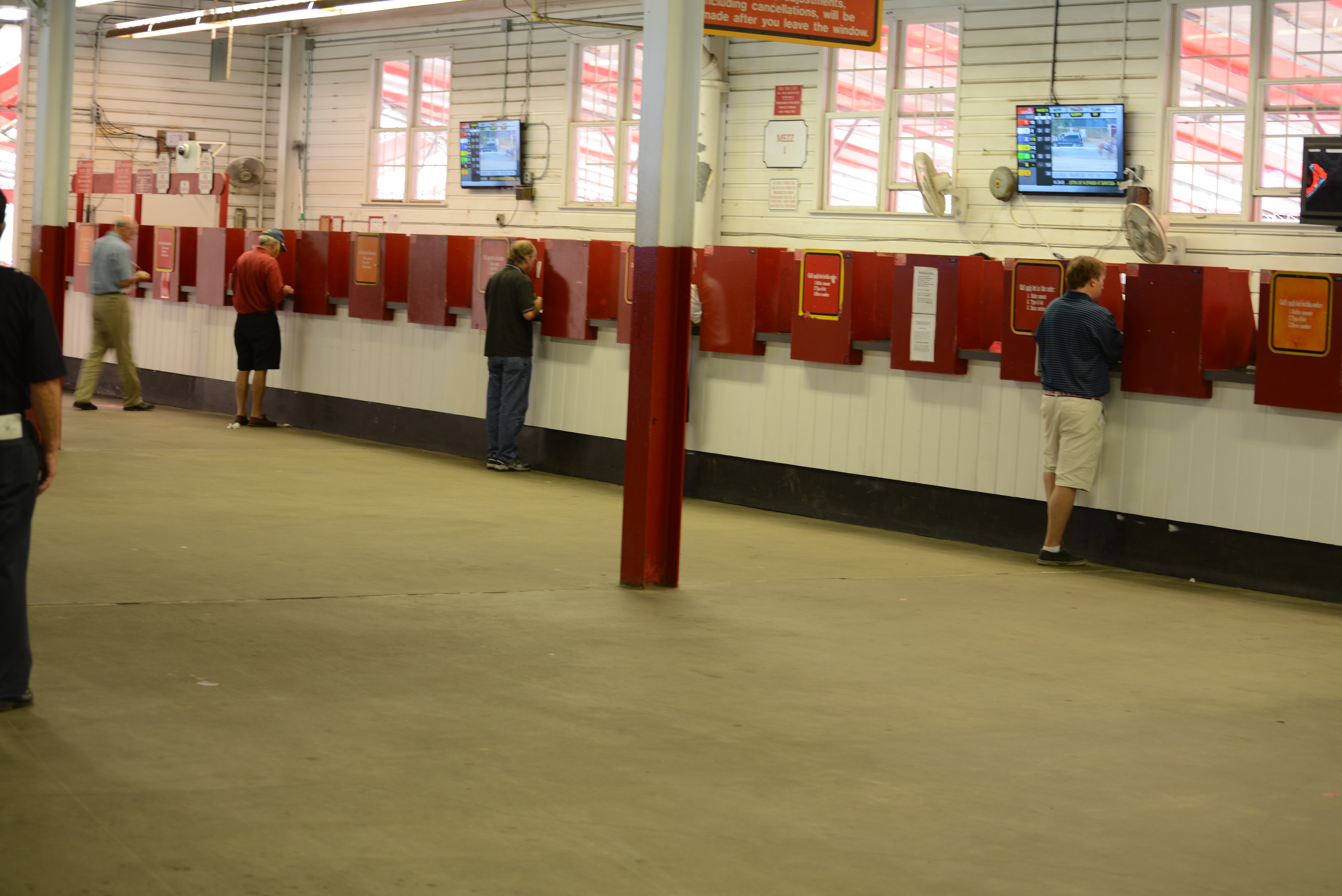
These photos were taken around 3:00, about halfway through the card.  Back in the grandstand area, there were minimal  –  if any  –  lines, at betting windows or concession stands.  The area around the paddock had a number of patrons, but I saw empty picnic tables.

NYRA reported attendance of 24,205 for Friday.

I’m no expert on estimating crowds from personal observation, but 24,000 people have to go somewhere, and these photos indicate they are not in the grandstand.  (I apologize that the club house photos are not that clear.)  A partial explanation arrived with a news article by Paul Post in The Saratogian.  He reported that NYRA counts all season passes in the attendance total whether or not the pass holder attends that day.  NYRA heavily promoted the passes this year before they “sold out,” and ended up selling 6,370 this year compared with only 1,402 in 2013.

Post quoted NYRA spokesperson John Durso:  “This policy is not new and was in place last year.  It is also the same policy used by professional sports such as Major League Baseball and the NFL.”

Neither part of Durso’s statement is actually true.  Let me rephrase that.  If the first part is true  –  that counting the passes as attendance is standard policy  –  those running NYRA should have some serious concerns.  It would mean that the 8,044 attendance on that Wednesday included 6,370 pass holders and only 1,674 paid admissions.  Monday of that week’s paid admissions would have been 2,974.

Durso’s comments regarding other professional sports also cannot be accurate.  The NYRA clubhouse season pass costs $50, as compared with a pay-as-go approach of $320 for the 40-day meet.  I could call the Boston Red Sox ticket office to see if they have a similarly discounted season pass, but know what the answer would be.

If Durso means that baseball and football count reserved seat tickets in the attendance whether or not the patron shows, that sounds right.  (Indeed, those same Red Sox were being ridiculed two seasons ago for claiming sell-outs when there were clearly thousands of empty seats.)  But, if he is talking about the reserved seat sales for Saratoga, that raises the question of whether those admissions are being counted twice.  The holder of a reserved seat ticket does not present it at the admission gate because the cost of the ticket does not include the admission price.

When NYRA changed its policy of counting “spinners” in the attendance on give-away days, Chief Experience Officer [sic] Lynn LaRocca said that the inflated attendance “adversely skewed the far more important business metric of on-track per capita spending.”  CEO Chris Kay has identified per capita spending as the measure of customer satisfaction with the NYRA experience.

As a matter of simple logic, if you include in the attendance figures people who are not there, you lower per capita spending  –  meaning, according to Kay, dissatisfaction with NYRA.   Monday, Wednesday and Thursday of the past week provides a remarkable contrast to the same three days last year.  According to NYRA’s attendance figures, total attendance for the three days in 2014 increased by 14,071, a remarkable 41 per cent boost.  What is more remarkable, however, is that the total handle decreased.  So, 14,000 more people were in attendance and bet less money!  The average daily per capita wagering fell from $175 in 2013 to $119 in 2014.  So, if we use Chris Kay’s formulation, customers are about 2/3 as happy with NYRA as they were a year ago.

I also did a simple calculation to determine what the real attendance figures might be this year compared with 2013.  I subtracted giveaway days from the total attendance.  Then I assumed that one-half of the increased pass holders actually showed up each day  –  a generous assumption I thought  –  and subtracted the other half from the total.  The result?  Attendance is down from 2013.

To answer the question of why did NYRA start cooking the books, I think the key day is that Wednesday when attendance was only 8,044.  I think they panicked, and saw their talking point of a vastly improved NYRA going down the drain.  So they came up with a way of inflating the attendance figures.

Spokesperson Durso came up with the typical refrain, according to Paul Post, that the “paid attendance figures are consistent, accurate and  –  as opposed to the past where spinners were counted in attendance figures  –  fully transparent.”  Well, we’re not talking about spinners.  NYRA’s change in that regard is the correct one.  We are talking about six sections of empty grandstand when NYRA reports attendance of over 24,000.

The NYRA response is the opposite of transparent.  They can report actual attendance figures but, according to Post, declined to do so.  (Durso also did not respond to my requests for information about either the make-up of handle figures or whether they have changed the way they counted attendance between this year and last.)

Why is true transparency  –  or honesty, if you prefer  –  important?

  • Call me a naive fool in Andrew Cuomo’s New York if you will, but I think government agencies  –  as NYRA is  –  have a legal and moral imperative to be open, accountable and truthful;
  • Obscuring the true attendance figures obfuscates the effect of the admission price increases NYRA implemented this year;
  • Inflating attendance figure prevents a meaningful comparison of Cuomo Administration’s NYRA policies and performance with those of the prior NYRA.
  • NYRA is supposedly preparing to return racing to a non-public structure as required by the law establishing the government-controlled NYRA.  The need for accurate attendance figures should be painfully obvious;
  • Most importantly, it prevents a meaningful assessment of the state of New York racing and the nation’s premier race meeting for 2014, and inserts in its place political calculation and manipulation.

The NYRA approach on this issue assumes we are all stupid.  No one with whom I spoke last week believed the NYRA attendance figures.  Some even laughed.  But there are thousands of livelihoods dependent on New York’s continuing to have vibrant racing and breeding industries.  I understand that those running the show may have different personal or political agendas, but please stop playing us for fools.


Scott Blasi is not the problem

Posted by noonante on July 31, 2014
Posted in: Horse Racing, Political/Social commentary, Politics. Tagged: PETA, PETA Video. Jockey Club, Scott Blasi, Steve Asmussen. Leave a comment

Scott Blasi, the unwitting star of PETA’s famous nine-minute video that roiled the horse racing world in the spring, is back to work at Saratoga Race Course.  Blasi had been “relieved of his duties” in the aftermath of the video and is now back working for trainer Steve Asmussen.

For those who may have forgotten, or wish they had, the People for the Ethical Treatment of Animals placed an undercover investigator in Asmussen’s barns at Churchill Downs and Saratoga.  The video recorded Blasi’s working on horses, as well as comments by veterinarians candidly assessing the administration of Lasix.  At one point, Blasi disparaged one of Asmussen’s top owners, Ahmed Zayat, who then removed his horses from the barn.  Other prominent owners, notably Ron Winchell, who owns the filly Untapable as well as the Derby horse Tapiture, stuck with Asmussen.  In addition to the video, PETA filed numerous complaints with varied federal, state  –  and even one municipal  – agencies.  To date, I am not aware of any of the agencies completing their review.

As dramatic and disturbing as the PETA video was, actual allegations  –  let alone evidence  –  of illegal behavior was thin.  One of the few allegations that may have some weight was that the Asmussen barn hired undocumented workers.  Another had to do with the use of a “buzzer,” a device to electrically shock a horse.  While showing dead horses and numerous injections administered to horses created precisely the response for which PETA hoped, there was very little substance when it came to actual wrongdoing.

A substantial portion of the punch provided by the video was Blasi’s use of the King’s English.  Someone else can go and count the number of times he used a common expletive as an adjective, adverb or verb, but it was plentiful.  But if using expletives was a reason to lose a job, many of us, me included, would be out on the street.  The common portrayal of Blasi as a horseman who did not care about the welfare of the horse is also an exaggeration.  There were actually instances in which his colorful language masked the fact that he was expressing frustration with a horse’s condition and the inability to treat it.  In one memorable sequence, a farrier recommended putting super glue in a horse’s hoof to deal with holes in the hoof.  Blasi’s response  –  “That’s the stupidest thing I’ve ever heard”  –  seems just about right.

None of this is to say that Blasi or Asmussen are victims in their portrayal by PETA.  It’s that Blasi does not deserve to take the full weight of problems in racing regarding the treatment of horses.  I do not know either man, but I do not think their behavior is unique in the business.  Whether Blasi returns to Asmussen’s barn or someone else’s, or never again works in the field, the problems that must be addressed are not affected.

Here are a few:

  • Horses are routinely given drugs  –  legally  –  even though there is no documented need for the medication.  Lasix is the most prominent example because it is permitted on race day, with one vet in the PETA video acknowledging it is a performance-enhancing drug.  Just go through any race card at any track and count the number of entrants not being given the drug.  You will not need a second hand.  Thyroxine is another.  In one interview Asmussen said he “feeds” the drug as if it is a nutritional supplemental and not a drug with potentially significant side effects.  One of racing’s golden boys, Bob Baffert, only stopped giving it to all his horses on a daily basis when being investigated for a number of sudden deaths of horses in his care.  Baffert did not even use a vet to administer it.  Grooms routinely added it to feed tubs.
  • Horses with musculo-skeletal issues continue to train, often with drugs, with no effort to conduct a diagnostic assessment.  This isn’t PETA or The New York Times saying it.  It was a common refrain by nationally-prominent veterinarians at the recent Welfare and Safety of the Racehorse Summit conducted by the Grayson-Jockey Club Research Foundation.
  • There are significant questions regarding the care for horses once their racing careers are done.  While the annual foal crop is now down to the low 20’s from a recent time when it was closer to 35,000, that is a large number of horses to care for once they are no longer compering.  I recently attended a fund-raiser for a prominent after-care group in which they talked about the well-known horses on their farm.  I have often thought this is an unusual selling point.  Why is there an issue caring for a horse who earned hundreds-of-thousands of dollars for its owner?  Why do those who did not share in the good times now need to contribute to feeding the horse?  I candidly do not know the economics of such farms, but I do know there are not a sufficient number of such facilities nationally to care for each retired horse  –  let alone the number who do not make it through early training and have to be retired before making it to the winner’s circle.

So racing has notable issues that must be addressed in order to grow the sport.  Let’s not assume Scott Blasi is the problem rather than simply perhaps an example of the problem.

Spa’s second week

Posted by noonante on July 29, 2014
Posted in: Horse Racing, Political/Social commentary, Politics, Saratoga thoughts. Tagged: Chris Kay, Jonathan Sheppard, NYRA, Saratoga race meet. 2 Comments

Here are one observer’s random observations:

  • The big story was the attendance:  There were some notable on-track happenings, not the least of which was trainer Jonathan Sheppard winning a race at Saratoga for the 46th straight year.  There were impressive performances by little known  –  at least until Saturday  –  The Big Brute Beast romping in an entry-level allowance allowance by 6 1/4  lengths and two-year old Competitive Edge winning by 10 1/4 in a maiden.  Then there was the event that miraculously did not become a tragedy when lightning struck a large tree in the back yard on Wednesday, shattering it and scattering debris around it.  It happened 20 minutes following the last race and no one was injured.  But I think the most significant event was the rebound in attendance after last year’s decline.  After back-to-back days produced figures under 10,000, including a mere 8,044 on Wednesday, I thought the story was going to be the effect of the price increases enacted by NYRA this year.  But Friday and Saturday saw significant increases over the last two years.  Since NYRA no longer counts “spinners” in its paid attendance figures, I averaged the gate for non-giveaway days for the meet so far.  This year’s average is 17, 969, an 11 percent increase over the same period last year, and 6 per cent over 2012.
  • Speaking of giveaways, why does NYRA still do them?  Saturday and Sunday drew about the same number of admissions  –  each day shy of 32,000.  Saturday’s handle, however, was more than double that of Sunday.  The per capita handle on Saturday was $181, with giveaway Sunday being a remarkably low $85.  I know it is one of those time-honored traditions, and perhaps the loss of good will may not be worth it, but how do you give away free stuff and get nothing in return?
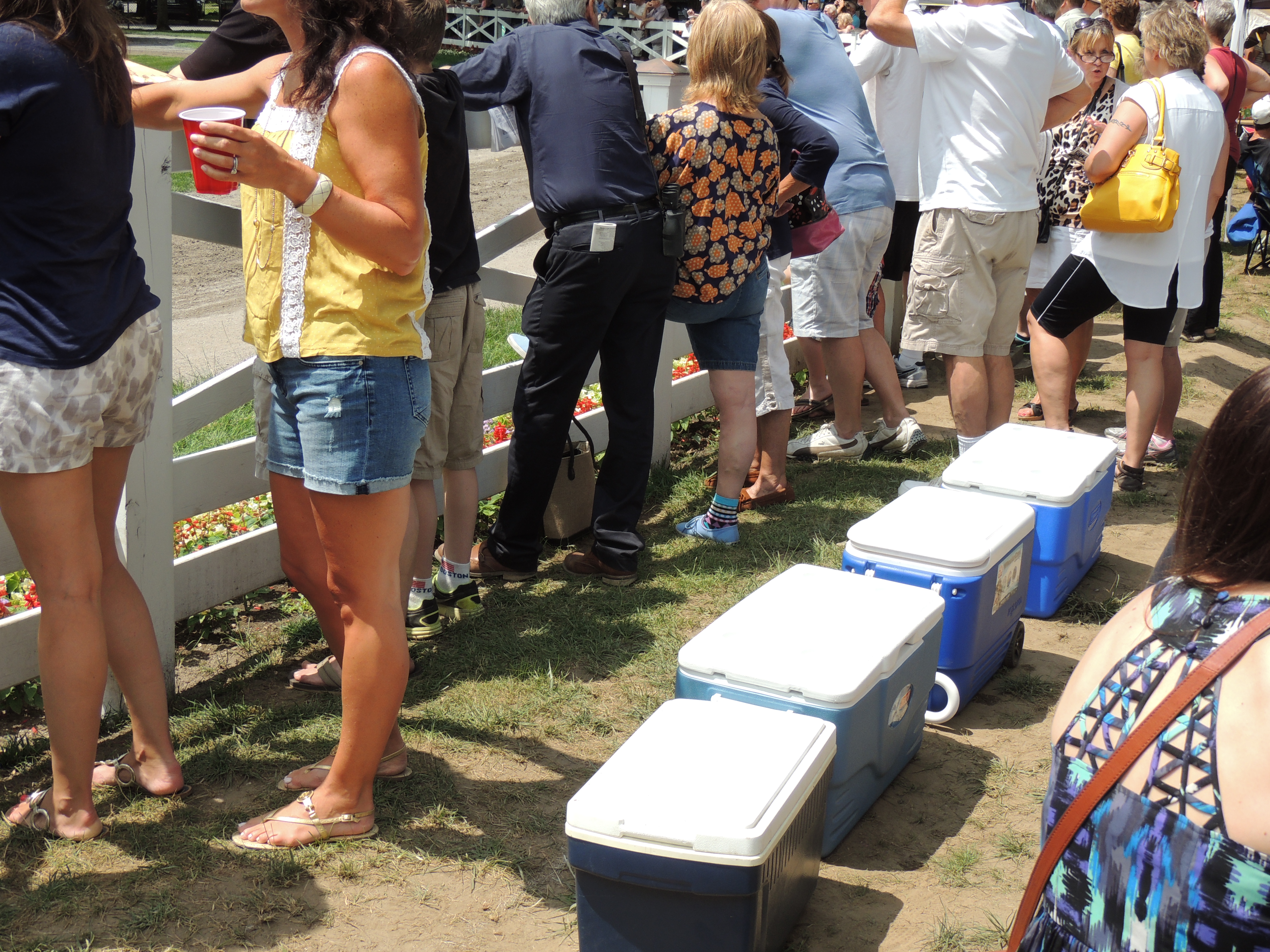
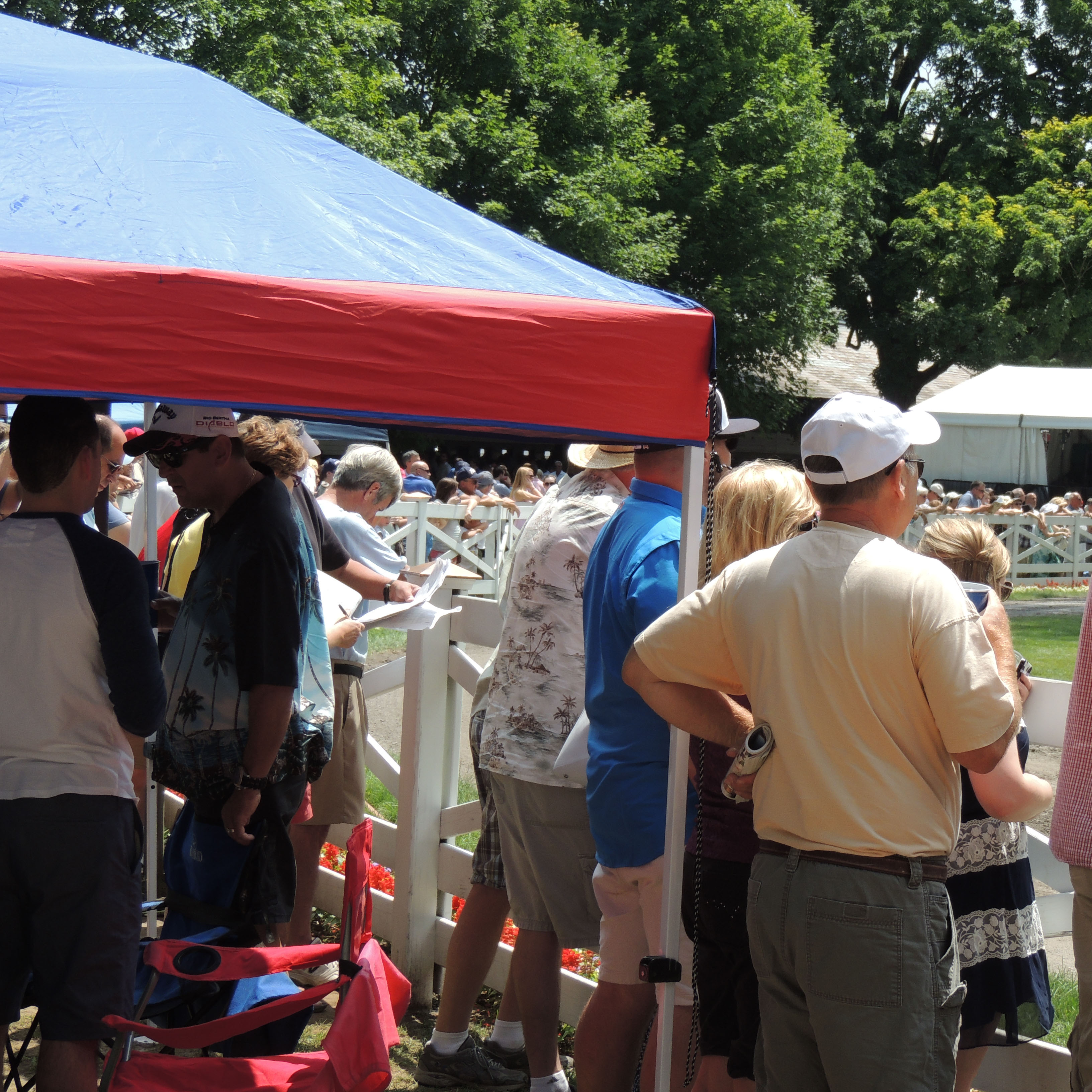
  • It’s time to free the paddock:  Last week I wrote about the restricted access to the paddock because of picnic tables, many with tents over them, being moved closer and closer to the fence.  Here is what it looked like on Saturday:

DSCN0077      DSCN0085

DSCN0083 PS

  • We have the cooler barrier, one filled with trash and a tent practically in the paddock.  Going to the paddock has been one of the nicest features of the Saratoga race track experience, and it is a place one often brought kids for an up-close look at the horses.  Now it has become almost inhospitable because of the efforts by a few customers to protect their space.  Also, a second fence was put up somewhat recently following an incident in which a loose horse in the paddock crashed into the lone fence.  Are horses that much safer now, or was it an opportunity to add some new picnic tables?
  • Speaking of kids, what happened to the new play area?  I thought one of CEO Chris Kay’s best ideas was an area to make the track a more fun place for children.  In addition to activities, there was going to be a real horse to touch.  When I went last Monday, the play area was there, but no horse.  Now it turns out that the new area is only there on Mondays.  Another day it is replaced by a New York craft beer tent.  Now I am a big fan of craft beers  –  and New York has some good ones  –  but 100 feet away is a permanent booth selling New York craft beers.  Saturday is devoted to a department store that is going to open an Albany branch, so instead of happy kids, we get a sales job.
  • NYRA’s new “low roller” tournaments is a great idea:  Following its introduction at Belmont, NYRA is hosting a tournament for those who may not want to spring for next week’s $1,000 buy-in.  On Monday’s $40 gets you in with $10 going to prize money and the remaining $30 being “live” bets.  Tournaments are a tremendous amount of fun, and here’s a way to experience it with a minimal cash outlay.  There is more info on the NYRA web site.

Spa’s first week

Posted by noonante on July 23, 2014
Posted in: Horse Racing, Political/Social commentary, Politics, Saratoga thoughts, Uncategorized. Tagged: Chris Kay, new NYRA, NYRA, Saratoga, Saratoga race meet. Leave a comment

Saratoga’s first week is in the books.  As with so much else that differentiates summer in Saratoga during the race meet from the rest of the world, a week is not seven days.  The first week is only four days and the remaining six are six days.  Here are the observations of one person:

  • Quality of the racing cards is generally good:  In recent years, there has been an abundance of 5 1/2 furlong turf races and low level claimers, many of which were at six furlongs.  So far, we have been treated to a variety of races, including honest-to-goodness allowances.  Only three claiming races of $20,000 were run, and only six turf races at 5 1/2.  The fields were of good size except for the number of short fields on “giveaway Sunday,” where five of the races had fields of six or fewer.  I hope that is not an indication that NYRA thinks they can get away with short fields if they are giving away what they describe as a “premier prized mementos.”
  • But how much longer will these stakes retain their grade?  The opening day feature has been the Grade II Schuylerville.  This year’s running attracted a field of only five, forcing NYRA to make it the third race on the card to make for more attractive betting opportunities in the later multi-race exotic wagers.  I read somewhere that the winning Beyer was only a 68.  The CCA Oaks on Sunday was a Grade I event that attracted all of six entrants, none of whom had yet won a Grade I.  The purse was $300,000, which makes the running of Tapiture  Untapable in the Haskell a sensible decision given that a second-place finish there would be a larger purse than winning a race that had been a significant event for three-year old fillies.
  • Is attendance up or down?  It is going to be somewhat difficult to make meaningful comparisons between this year and previous ones since NYRA has decided sensibly to no longer include the “spinners” on giveaway days in the paid attendance.  But the Friday, Saturday and Monday attendance was about where it was two years ago, with the average for the three days being 56 customers higher this year.  Last year saw the meet open with such oppressive heat that the biggest discussion on Opening Day was whether to cancel.
  • NYRA’s cosmetic changes are mostly positive:  The new monitors are an improvement, and the added picnic tables in the backyard are less obtrusive than I expected.  Enlarging the downstairs clubhouse restaurant removed some of the benches, but still left some in place.  One negative on the picnic tables, however, is that by placing them so close to the paddock, the ability of fans to go to the paddock has been seriously restricted.  On the weekend, some of those tables near the paddock were covered by tents, meaning access was even more limited.
  • Who are the guys with NYRA badges who seem to have nothing to do?  I spent a delightful Monday afternoon just walking around in the backyard area.  I was struck by seeing several employees with the NYRA name tags who seemed to have nothing to do.  I realize they may be yet more customer service representatives  –  in addition to those at the “May I help you” stations upon entering the track  –  but it was kind of puzzling.  Perhaps if there was a bigger crowd they would have some work.

That Monday walking around made me realize how much we can take the Saratoga experience for granted.  While going to any race track can be a venture from the real world to a different, totally contained one, Saratoga is more akin to a fantasy.  It’s a beautiful facility located in the nice part of town, and features the best race meet in this country if not the world.  And it is but a short walk to a vibrant downtown or a short drive to beautiful country, whether it be the farms five miles away or the start of the Adirondack mountains 30 miles from here.

Yet it is a fragile environment for racing in New York.  The government-controlled NYRA is preparing a plan for the future structure of racing in New York.  One news report said the draft would be ready next month, but there is no indication that NYRA will share it with either the public or the tens of thousands whose livelihood depends on the racing and breeding industries.

Then there are the signs that NYRA’s management just doesn’t get it.  There is the limited access to the paddock.  They stopped selling clubhouse passes after marketing them in what I thought was a great way to blunt the criticism for increasing prices this year.  It is hard to believe that they are so strapped for cash that they would curtail one of the best fan-friendly initiatives they have  –  with the increased handle that would accompany those going more often because of the pass.

In a press release they issued after the first weekend, they actually hailed an event that show-cased an “all natural, cold-pressed, no concentrate, no sugar added juice” that you may only have seen in Thruway rest stops  –  I’m not making this up.  This would be the same weekend in which they gave up on an ill-conceived idea to limit the availability of a beloved, free newspaper, The Saratoga Special, which has done more to promote interest in Saratoga’s racing than all of their over-the-top press releases.

We should not lose sight of the fact that this is Chris Kay’s second year at the Spa.  After the fiasco the Belmont Stakes was for many fans  –  with no apology forthcoming  –  he continues to make rookie mistakes.

What is NYRA thinking on this one?

Posted by noonante on July 19, 2014
Posted in: Horse Racing, Political/Social commentary, Politics, Saratoga thoughts. Tagged: Chris Kay, Joe clancy, new NYRA, NYRA, Sartoga Special, Sean Clancy. Leave a comment

There are many things that happen that simply defy belief.  There are the tragedies that seemingly occur everyday in our world.  Then there are the more prosaic matters that make wonder how anyone could be this stupid.  That brings us to the New York Racing Association and The Saratoga Special.

For those not familiar with the Special, it is a daily newspaper published during the Saratoga meet, distributed for free, and all about racing at the Spa.  That’s it, nothing but photos, articles, handicapping and thoughts about racing at Saratoga.  It doesn’t engage in gossip or negativity.  It is published by racing journalists who come to Saratoga from their Maryland base, rent a house, and then literally work as close to 24/7 as one possibly could.  I have never heard a negative comment about the paper or its chief honchos, brothers Sean and Joe Clancy.  That alone makes it a unique institution.

So why would NYRA want to restrict the distribution of a high-quality  –  and let me say it again, free  –  paper that promotes the Saratoga racing experience as no one else does?  If that level of obtuseness is not maddening enough, they dropped this proposal on the Special‘s crew the day before the meet began on Friday.  That’s right, a group in love with Saratoga moved into their rental house, passing up any other opportunities they may have had while devoting themselves to this project, and are told the day before that NYRA had a different idea.

NYRA’s leadership claims to have the goal of enhancing the customer experience and attracting new fans to the sport.  The Special furthers each of those supposed priorities.  I am starting to think, however, that the real priority of CEO Chris Kay and his bevy of recently hired managers is the perpetuation of their own existence.  There is a clear party line emitting from all those working for NYRA in a public capacity that things have never been better and will only get even more so.  So perhaps a straightforward and professional journalistic enterprise that does not spew the party line has no place in the “new” NYRA.

The Saratoga Special has been an important part of the Spa experience ever since they began publishing 13 years ago.  There are many things that are unique and special about Saratoga and the Special is one of those.  The current NYRA leadership should aspire to enter that fabric rather than trying to suppress an important voice.

Posts navigation

← Older Entries
Newer Entries →
  • Archives

    • April 2024
    • January 2024
    • December 2023
    • November 2023
    • October 2023
    • August 2023
    • June 2023
    • May 2023
    • January 2022
    • December 2021
    • August 2021
    • July 2021
    • June 2021
    • May 2021
    • April 2021
    • September 2020
    • August 2020
    • July 2020
    • June 2020
    • March 2020
    • November 2019
    • October 2019
    • September 2019
    • August 2019
    • June 2019
    • May 2019
    • April 2019
    • March 2019
    • January 2019
    • December 2018
    • October 2018
    • August 2018
    • July 2018
    • May 2018
    • April 2018
    • March 2018
    • February 2018
    • January 2018
    • October 2017
    • September 2017
    • August 2017
    • June 2017
    • May 2017
    • April 2017
    • February 2017
    • January 2017
    • December 2016
    • November 2016
    • October 2016
    • September 2016
    • July 2016
    • June 2016
    • May 2016
    • April 2016
    • March 2016
    • February 2016
    • January 2016
    • December 2015
    • November 2015
    • October 2015
    • September 2015
    • August 2015
    • July 2015
    • June 2015
    • May 2015
    • April 2015
    • March 2015
    • February 2015
    • January 2015
    • December 2014
    • November 2014
    • October 2014
    • September 2014
    • August 2014
    • July 2014
    • June 2014
    • May 2014
    • April 2014
    • March 2014
    • February 2014
    • January 2014
    • December 2013
    • November 2013
    • October 2013
    • September 2013
    • August 2013
    • July 2013
    • June 2013
    • May 2013
    • April 2013
    • March 2013
    • February 2013
    • January 2013
    • December 2012
    • November 2012
    • October 2012
    • September 2012
    • August 2012
    • July 2012
    • June 2012
    • May 2012
    • April 2012
    • March 2012
    • February 2012
    • January 2012
    • December 2011
  • Categories

    • Cycling
    • Golf
    • Horse Racing
    • Political/Social commentary
    • Politics
    • Saratoga thoughts
    • Uncategorized
  • Meta

    • Create account
    • Log in
    • Entries feed
    • Comments feed
    • WordPress.com
  • Enter your email address to follow this blog and receive notifications of new posts by email.

  • Follow Tom Noonan on Twitter

    Tweets by noonan_tom
Blog at WordPress.com.
Tom Noonan
Blog at WordPress.com.
  • Subscribe Subscribed
    • Tom Noonan
    • Join 152 other subscribers
    • Already have a WordPress.com account? Log in now.
    • Tom Noonan
    • Subscribe Subscribed
    • Sign up
    • Log in
    • Report this content
    • View site in Reader
    • Manage subscriptions
    • Collapse this bar
 

Loading Comments...